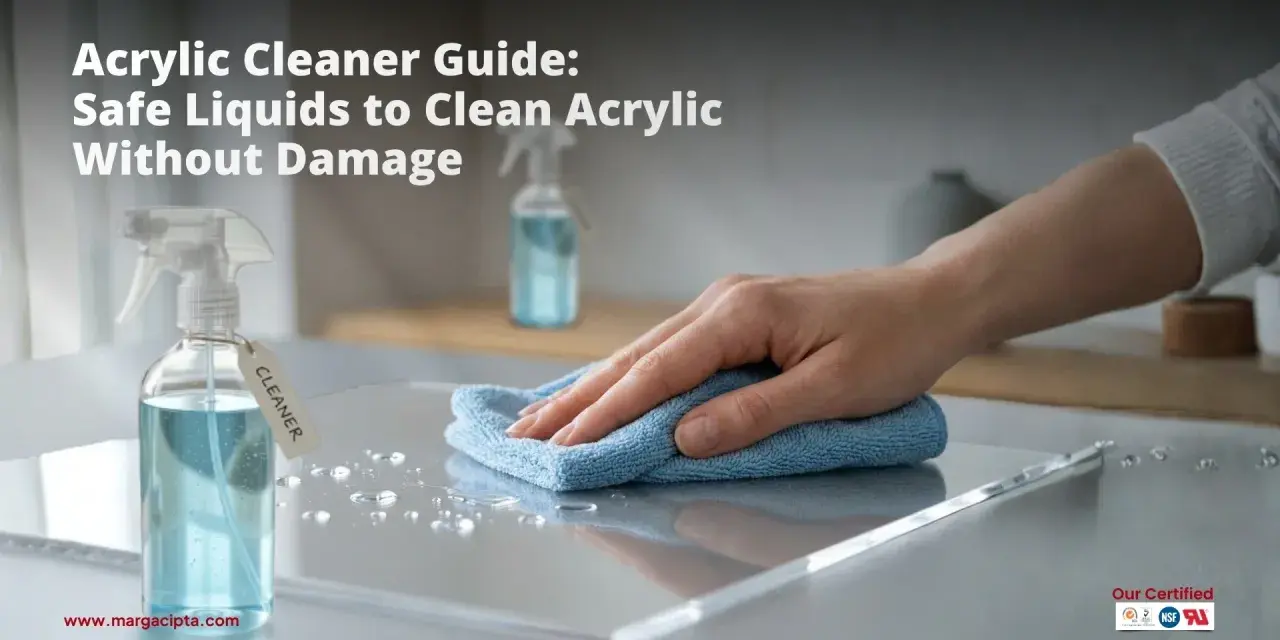
The safest acrylic-cleaning routine is gentle, wet, and non-abrasive
- Rinse or blow off loose dust before wiping, so grit does not become sandpaper.
- Use a soft microfiber cloth or lint-free cotton, not paper towels or brushes.
- For everyday dirt, lukewarm water with a few drops of mild dish soap is usually enough.
- Avoid ammonia, acetone, strong solvents, and abrasive powders unless the sheet maker specifically approves them.
- Dry by blotting or a light pass with a clean cloth instead of rubbing hard.
- For stubborn haze or static, use a plastic-safe cleaner and test a hidden spot first.
What acrylic actually needs from a cleaner
Acrylic, or PMMA, is clear and durable in the right setting, but its surface is much easier to mar than glass. I think of it as a material that rewards restraint: if you let grit stay on the panel and drag it around, you are polishing scratches into the surface instead of cleaning it. The other weak point is crazing, a network of fine stress cracks that can appear when acrylic meets the wrong solvent or too much pressure.
That is why the safest method is almost always the least aggressive one that solves the job. Dust wants one treatment, greasy fingerprints want another, and coated or mirrored sheets need extra caution because the face is not the only layer that can be damaged. Once you understand that difference, the rest of the process becomes much easier to control.
A safe routine for everyday cleaning
For most panels, displays, covers, and fabricated parts, I start with the same routine every time: remove loose debris first, then wash gently, then dry without friction. That sequence matters more than the brand name on the bottle.
- Rinse the surface with clean water or use a very soft air blow to lift dust and loose particles.
- Prepare lukewarm water with a small amount of mild dish soap.
- Moisten a microfiber cloth or soft sponge with the solution. Do not scrub dry.
- Wipe with light pressure in broad, even passes. If the panel is large, work in sections.
- Rinse with clean water to remove soap residue.
- Blot dry with a clean, soft cloth or let the surface air-dry if spotting is not a concern.
Two details make a real difference here. First, I prefer to wet the cloth rather than flood the sheet, because excess liquid can run into seams, edges, or bonded joints. Second, I never use force on the first pass; if dirt is not coming off easily, that usually means the surface needs a longer soak or a different cleaner, not more pressure. Once this routine is in place, you can decide when a stronger product is justified.
What to use when the mess is greasy or stubborn
Not every mark on acrylic is dust. Finger oil, adhesive residue, kitchen grime, outdoor film, and old static buildup all behave differently. The mistake I see most often is skipping straight to a harsh spray when a targeted, plastic-safe cleaner would have been enough.
| Problem | Best first move | Second-line option | What not to do |
|---|---|---|---|
| Dust and fingerprints | Water + mild soap + microfiber cloth | Plastic-safe cleaner | Dry wiping with paper towels |
| Grease or oily film | Soap solution and a fresh cloth | Spot-test isopropyl alcohol or naphtha only on uncoated acrylic if the product guide allows it | Acetone, gasoline, lacquer thinner |
| Adhesive residue | Warm water and patience | Manufacturer-approved plastic cleaner | Scraping with a blade or abrasive pad |
| Outdoor grime and bird droppings | Pre-rinse, then soap and water | Longer soak before wiping | High-pressure jets close to the surface |
| Static-attracted dust | Antistatic plastic cleaner | Ionized air in fabrication settings | Rubbing the panel dry |
I treat solvents as a last resort, not a default. Some manufacturers allow isopropyl alcohol or naphtha for heavy grease on standard, uncoated acrylic, but others are stricter, and coatings or printed surfaces can react differently. If I cannot confirm compatibility, I test a hidden area first and keep the solvent away from painted backs, decorative inks, and bonded edges. That caution becomes even more important when a panel is part of a finished product rather than a plain sheet.
Once the stain is under control, the next challenge is preventing the common mistakes that make acrylic look worse over time.What to avoid if you want to prevent haze and crazing
Acrylic often looks damaged not because it was dirty, but because it was cleaned with the wrong tool. The biggest offenders are surprisingly ordinary: glass cleaner with ammonia, abrasive sponges, scouring powders, paper towels used on dusty surfaces, and aggressive solvents that attack the polymer. On clear sheets, that damage shows up as cloudiness, swirl marks, micro-scratches, or the fine spiderweb pattern known as crazing.
- Ammonia-based window sprays can dull the surface and, over time, encourage stress cracking.
- Acetone, benzene, lacquer thinner, and gasoline are too aggressive for routine cleaning and can permanently damage the sheet.
- Scouring pads and brushes leave visible scratches almost immediately.
- Paper towels are convenient, but they can drag grit across the panel and leave fine marks.
- Dry wiping builds static and grinds dust into the surface instead of removing it.
I also stay cautious around heat and pressure. A steam cleaner, pressure washer, or very hot rinse can be useful in some controlled outdoor situations, but close-range force is risky on thin panels, fabricated corners, and edge-bonded assemblies. If you need stronger cleaning equipment, the real question is whether the part should be cleaned in place at all. That leads naturally to the surfaces that need special handling.
How to handle static, fine scratches, and cloudy spots
Static charge is one of the quiet reasons acrylic gets dirty so quickly. The surface attracts dust, and the more you rub it dry, the worse the cycle becomes. In that case, a plastic-safe antistatic cleaner is often more useful than another pass with soap and water, because it helps reduce the dust attraction instead of just moving particles around.
Fine scratches are different. If the mark is shallow, a plastic polish or scratch remover can sometimes improve clarity, but I would only use it after the panel is already spotless. Polishing over trapped grit makes things worse, not better. Work lightly, keep the pad clean, and stop as soon as the surface starts to recover its gloss.
Cloudiness is the tricky one. If the haze comes from residue, soap film, or static, better rinsing and a cleaner cloth often solve it. If the cloudiness comes from solvent damage or deep crazing, polishing will not fully restore the sheet. At that point, replacement may be the only honest fix. Once the damage is in the structure of the surface, cleaning can only do so much.
Extra care for coated, mirrored, or fabricated acrylic parts
Not all acrylic parts behave the same way. A plain clear panel is one thing; a mirrored sheet, a coated display cover, a thermoformed part, or a piece with printed graphics is another. I am much more conservative with those parts because the visible face may be only part of the story.
- Coated acrylic can tolerate some cleaners that would harm uncoated sheet, but only if the coating manufacturer says so. I always test a hidden corner.
- Mirrored acrylic needs extra caution on the back side, where paint or reflective layers can be damaged by chemicals or scraping.
- Bonded or fabricated parts should not be soaked aggressively at seams, because liquid can weaken adhesive joints or collect in edge details.
- Printed or decorated surfaces may react badly to solvents even when the base material is acrylic, so the decoration sets the limit, not the sheet itself.
- Outdoor installations often clean up well with a rinse and mild soap, but if grime has baked on, I prefer a longer soak over harder scrubbing.
My rule is simple: the more finished the part, the more I protect the finish. That is especially true in fabrication work, where a panel may look like raw acrylic but actually include coatings, edge treatments, or cosmetic layers that are far easier to damage than the substrate. With those exceptions in mind, the last step is less about cleaning and more about preventing the need for heavy cleaning in the first place.
The habits that keep acrylic clear longer
The best acrylic care is mostly about preventing friction, contamination, and stress. Clean a little more often instead of waiting for buildup. Keep one soft microfiber cloth for acrylic only, and wash it without fabric softener so it does not leave residue. Store sheets with protective film or clean interleaving when possible, and never toss them against dusty cardboard or rough workshop surfaces.
In fabrication or installation environments, I also pay attention to static, because static makes a panel look dirty even after it has been cleaned. A light antistatic treatment, careful handling, and a habit of checking a hidden spot before using a new product save a lot of rework. That is the practical edge: acrylic stays clear when the cleaning method is matched to the material, the finish, and the kind of soil on the surface. If you keep those three variables in view, maintenance becomes routine instead of risky.